Monitoring the density of freshwater mussels across Lake Massawippi
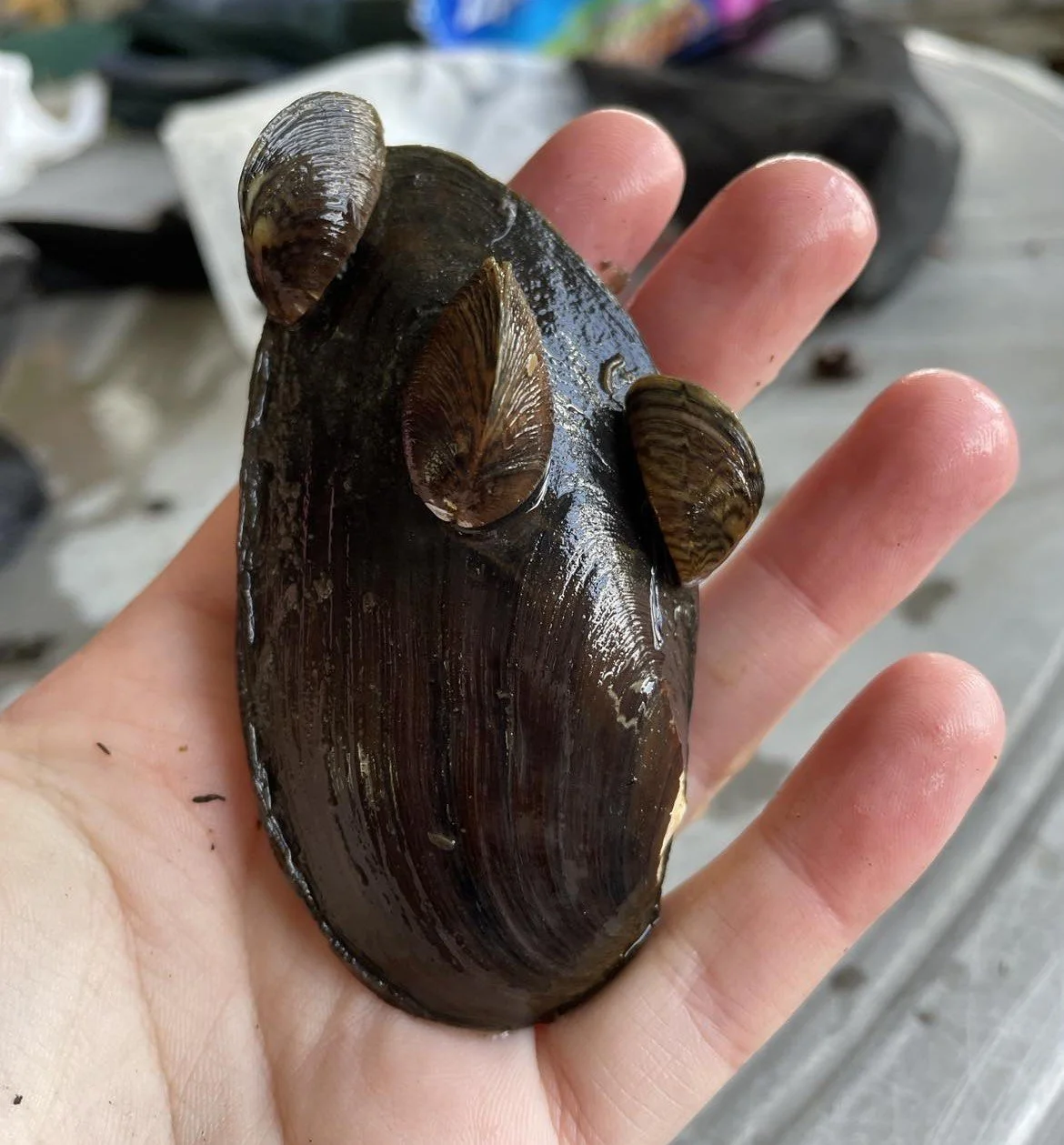
The introduction of the zebra mussel can also have a negative impact on native freshwater mussel populations in a lake (bivalves of the Unionidae family). The shells of native mussels provide an ideal surface for zebra mussels to attach to, directly competing for food and oxygen. As a result, zebra mussels can displace them in the ecosystem, potentially causing local extinctions. However, the negative effects of zebra mussels on the Lake Massawippi environment are still minimal at this time.

In 2023, a project to monitor freshwater mussel density was developed in collaboration with the MELCCFP. The objectives were to characterize the density, diversity, and physiology of mussels in Lake Massawippi at nine stations across the lake, as well as to compare and quantify variations in mussels that could be explained by long-term pressure from zebra mussels.
In 2023, 7 out of 9 stations showed signs of mussel colonization by zebra mussels, with colonization rates ranging from 0 to 25%. In 2024, 8 out of 9 stations showed signs of colonization, with rates ranging from 0 to 50%.
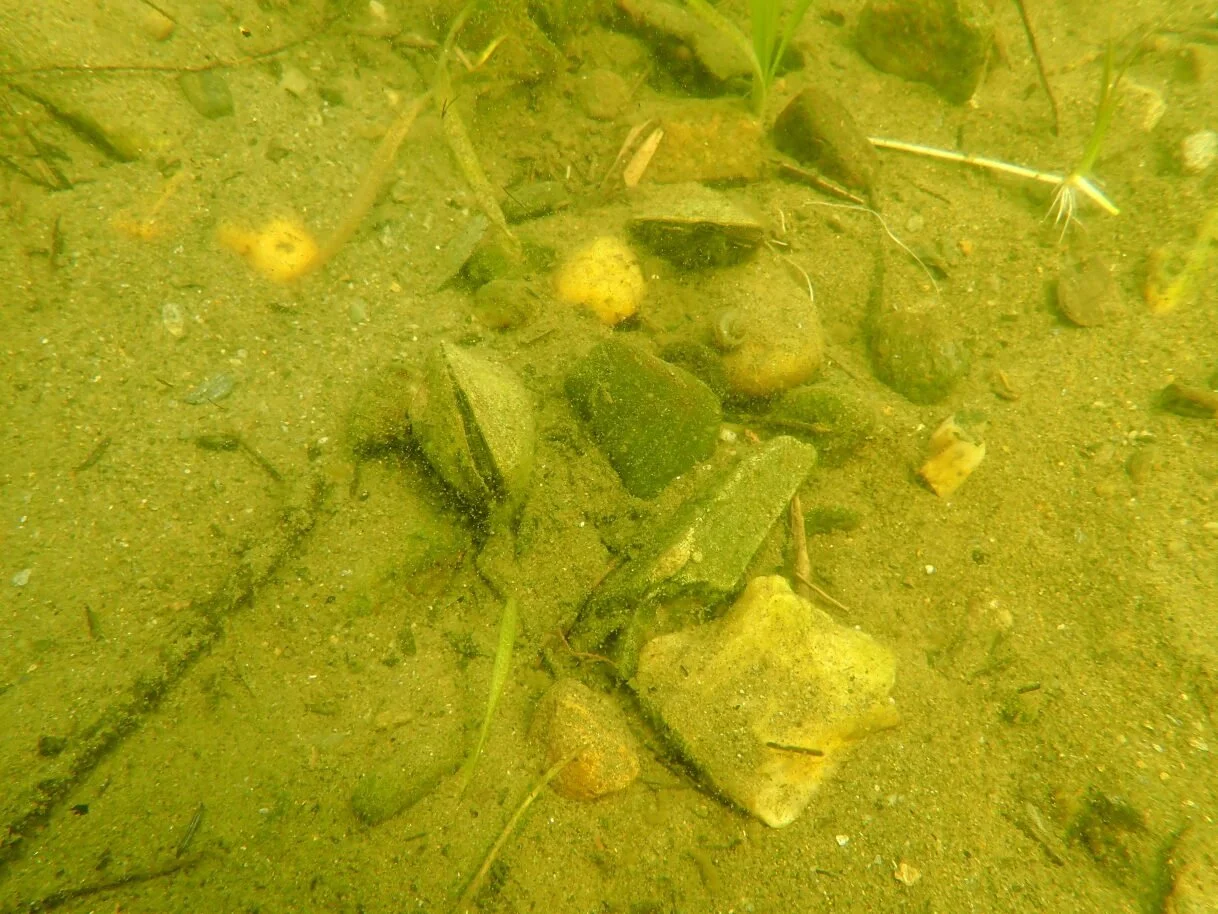
Four species of freshwater mussels were identified during the sampling: the Eastern Elliptio (Elliptio complanata), the Eastern Pondmussel (Pyganodon cataracta), the Giant Floater (Pyganodon grandis), and the Eastern Lampmussel (Lampsilis radiata).
Due to limited financial resources, this project could not continue in 2025. However, during removal dives, it was observed that every mussel was colonized by zebra mussels. Mussels located in the northern end of the lake, where zebra mussel densities are highest, generally showed full colonization on their upper parts exposed above the substrate.